
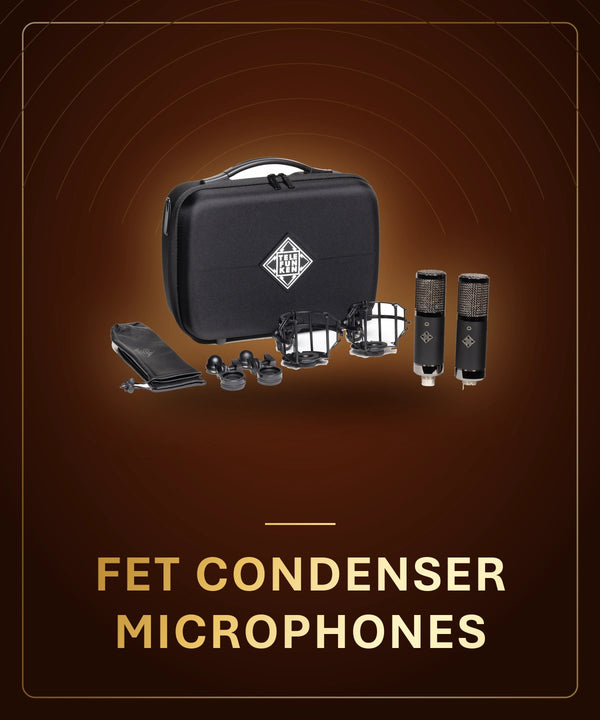
FET Condenser Microphones Buying Guide
November 5, 2026 · Shivansh Electronics, Kolkata
A condenser microphone uses a charged capsule to turn sound into an electrical signal. In a FET condenser, a field-effect transistor buffers the signal, giving a quiet, fast and reliable microphone that runs on 48 V phantom power. FET condensers are the workhorses of studios, broadcast and live recording. This guide explains how to choose from our range of FET condenser microphones.
What FET means for you
The FET circuit is compact and efficient, so these microphones are lighter, more robust and easier to power than valve designs. They tend to have low self-noise, fast transient response and a neutral to detailed sound, though designs vary. If you prefer a warmer, softer character on vocals, compare with tube condenser microphones.
Large or small diaphragm
Large-diaphragm models usually give a fuller low end and lower self-noise, and are the usual choice for vocals, voice-over and many instruments. Small-diaphragm models respond faster and have more consistent off-axis behaviour, suiting acoustic guitar, percussion, overheads and orchestral work; see small diaphragm condenser microphones.
Polar patterns
- Cardioid: front pickup with rear rejection; the standard for most studio and broadcast use
- Omnidirectional: even pickup, natural room sound and no proximity effect
- Figure-of-eight: front and rear pickup, rejecting the sides
- Switchable or multi-pattern: one microphone for many jobs, including wide stereo recording
Key specifications
- Self-noise: lower is quieter; important for soft sources and when using high gain
- Maximum SPL: a high value lets you record drums, guitar cabinets and loud voices without distortion
- Sensitivity: affects how much preamp gain you need
- Frequency response: check for presence boost or bass roll-off, which shapes the tone
- Pad and low-cut switches: reduce level and rumble at the source
Power and preamp needs
FET condensers need 48 V phantom power from a mixer, preamp or studio audio interface. Use balanced XLR cables. Condensers are more sensitive than dynamic microphones, so use a clean preamp; see preamps and processors for external options. Connect the microphone with phantom power off, then switch it on to avoid a thump.
Applications
Vocals and voice-over
A large-diaphragm cardioid with a pop filter and shock mount is the usual choice. Treat the room or use a reflection filter.
Instruments
Use small or large diaphragm models depending on the source. Position about 15 to 30 cm from an acoustic guitar and adjust until the tone is balanced.
Broadcast and podcasting
Sturdy FET microphones on boom arms are common in radio studios, and their consistency across units helps when several presenters share a desk.
Live and stage
Handheld and instrument clip models appear in theatres, choirs and churches, but gain before feedback is lower than with dynamic microphones; dynamic microphones are the better choice for loud stages.
Proximity effect and distance
Cardioid microphones boost low frequencies as the source comes closer. This can add warmth to a voice at 5 to 10 cm, but becomes boomy if too close. Use the low-cut switch or move back a little. Consistent distance matters for broadcast and voice-over, where level should stay steady between takes.
Reliability and consistency
Because FET circuits are stable, microphones of the same model usually sound alike, which helps when you want several identical microphones for drum overheads, a choir or a panel discussion. Buy multiples from the same batch where possible so the character matches.
Accessories
Shock mounts, pop filters and boom arms improve results more than small changes in microphone model. A foam windshield helps outdoors, and a proper case protects the capsule from dust and humidity.
Common mistakes to avoid
Most disappointing recordings with condensers come from the room and technique rather than the microphone.
- Recording in a reflective, untreated room and expecting studio sound
- Leaving out the pop filter and shock mount
- Placing the microphone too close and getting excessive proximity effect
- Choosing a very sensitive microphone for loud stages with monitors
- Forgetting to switch on phantom power or using a mixer that cannot supply it
- Storing the microphone in damp conditions, which can cause crackle
Buying FET condenser microphones at Shivansh Electronics
Shivansh Electronics, Kolkata, West Bengal, India supplies genuine products only, exactly as the manufacturers build and specify them. Every product page has its specifications, so you can compare FET condenser microphones side by side before you decide. Our team can advise on WhatsApp or by phone, help you shortlist options for your room, venue or project, and suggest the accessories you will need.


