
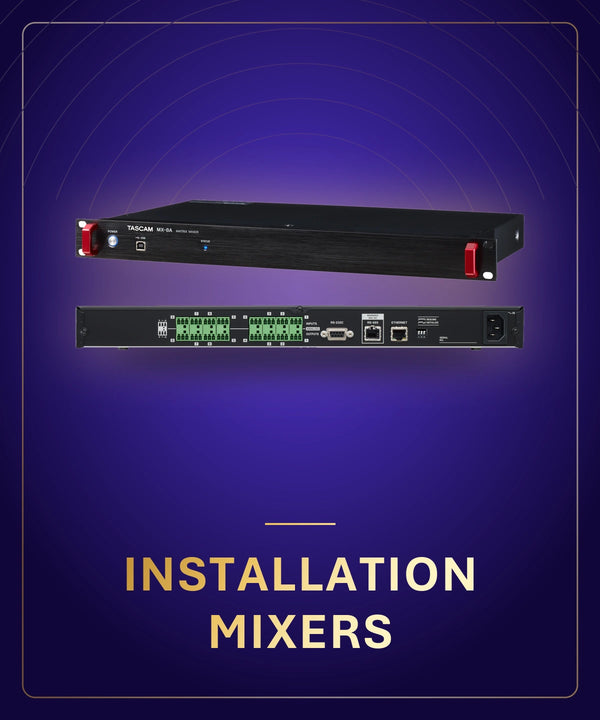
Installation Mixers Buying Guide
November 5, 2026 · Shivansh Electronics, Kolkata
An installation mixer is built to stay in a rack or cabinet and run reliably in rooms where it is used by staff rather than audio engineers. This guide explains how to choose from our range of installation mixers for conference rooms, restaurants, shops, schools and places of worship.
What makes an installation mixer different
Compared with a live mixer, an installation unit usually has fewer physical controls, more zone outputs and features aimed at simple operation. It often supports remote control, presets, wall panels and automatic functions, so that users cannot accidentally ruin the sound. For performance use, see our analog mixing consoles.
Inputs and sources
List every source: microphones, background music players, computers, video conferencing and paging. Check the number of microphone inputs with preamps and the type of connector, and whether each input has switchable phantom power for condenser microphones. Line inputs should match the level of your sources. Plan for future additions.
Zones and outputs
Zones let different areas of a building receive different sources and levels. For example a restaurant might play music in the dining area, a different mix in the bar and announcements in all areas. Count the output zones you need, and check whether each has its own level, equalisation and source selection.
Priority, ducking and paging
Priority functions automatically lower music when a microphone is used, so announcements are heard clearly. Ducking depth and recovery time should be adjustable. For paging, check the ability to send announcements to selected zones or all zones, and to trigger from external contacts.
DSP and control
Built-in processing such as equalisation, compression, feedback suppression and delay can replace external processors. Look at how the mixer is configured: software, front-panel controls, wall controllers or a network connection. Presets help staff change between modes such as a meeting, an event and background music. Compare with dedicated preamps and processors for larger projects.
Amplification
Some installation mixers include power amplifiers, which saves space and cost in small rooms. Others are line-level mixers feeding separate power amplifiers. Check the power available per channel, whether outputs support 100 V line and whether it suits your ceiling loudspeakers.
Mounting and installation
Confirm the mounting format: rack, tabletop or wall box. Allow for ventilation, cable access and mains supply. Label every input and output, document settings and keep a copy of the configuration.
Choosing for your application
Conference and meeting rooms
Look for several microphone inputs, a connection for video conferencing and automatic functions that keep levels consistent. Simple wall control lets users adjust volume without changing the setup.
Restaurants, shops and hotels
Zone control, background music inputs and a paging microphone with priority are the main features. Presets for opening hours and events keep operation simple for staff.
Schools and places of worship
These need microphone inputs for speakers and teachers, a feed for recording or streaming and possibly an assistive listening output. Choose a unit that volunteers can operate with confidence.
Commissioning and handover
Set up and test every zone with the final sources and loudspeakers installed. Set sensible maximum levels so users cannot overdrive the system, record the settings and give the owner a short written guide covering power-on, source selection and paging. A clearly labelled panel and a simple preset for each common use make the system easier to use years after the installer has gone. Schedule a follow-up visit after a few weeks of real use, because staff often find small improvements, such as a different music level at lunchtime or a microphone that needs a little more gain.
Common mistakes to avoid
- Buying too few microphone inputs and having no spare for expansion
- Forgetting that condenser microphones need phantom power
- Setting priority ducking too deep or too slow
- Giving staff full access to every control instead of locking the settings
- Running unbalanced cables over long distances, causing hum
- Using a mixer without amplification with loudspeakers that need power
Buying installation mixers at Shivansh Electronics
Shivansh Electronics, Kolkata, West Bengal, India supplies genuine products only, exactly as the manufacturers build and specify them. Every product page has its specifications, so you can compare models side by side before you decide. Our team can help you shortlist options for your room, venue or project and advise on WhatsApp or by phone: call +91 89818 07755 or +91 91477 00677.


