






TELEFUNKEN TF11 FET
MRP - Rs. 1,54,300
TELEFUNKEN TF11 FET cardioid large-diaphragm condenser mic: open, detailed tone, > 135 dB SPL, 4 dBA self-noise, +48V phantom power, hand-built in the USA. Available in India from Shivansh Electronics, Kolkata, West Bengal, India.
VISUAL GUIDE — See Every Photo, Spec & Setup Step (PDF)
The price shown is the MAXIMUM RETAIL PRICE (MRP), inclusive of all taxes. For the best price, exclusive offers and discounted rates, delivery timelines, or any other information, please DM us or call +91 89818 07755 / +91 91477 00677. We will gladly share an exclusive coupon code that you can apply at checkout. All payments are processed securely through Razorpay, our trusted payment gateway partner.
General
| Type | FET condenser microphone, large diaphragm |
| Series | TELEFUNKEN Alchemy Series |
| Polar pattern | Cardioid (fixed) |
| Capsule | TK51S, edge‑terminated large diaphragm, single membrane |
| Output transformer | T218, UK‑made |
| Build | Designed and assembled by hand in Connecticut, USA |
Acoustic and electrical
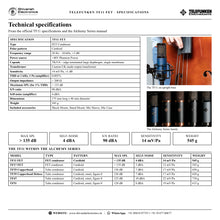
| Frequency range | 20 Hz - 20 kHz, ±3 dB |
| Sensitivity | 14 mV/Pa, ±1 dB |
| THD (1 kHz, 1 Pa, amplifier) | 0.005% |
| Output impedance | < 200 Ω |
| Maximum SPL (for 1% THD) | > 135 dB SPL |
| S/N ratio | 90 dBA |
| Self‑noise (amplifier) | 4 dBA |
Power supply and cable
| Power source | +48V phantom power from the mic preamp or audio interface |
| Power‑up time | Allow 15 seconds after applying phantom power |
| Output connector | XLR, for a standard 3‑pin microphone cable |
Physical
| Dimensions | 175 mm long x 46 mm diameter |
| Weight | 545 g |
In the box
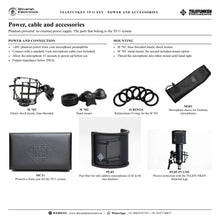
| Microphone | TF11 microphone |
| Case | MC11 Microphone Case |
| Shock mount | M 703 Shock Mount |
| Stand mount | M 782 Stand Mount |
| Sleeve | MS01 Microphone Sleeve |
Product overview
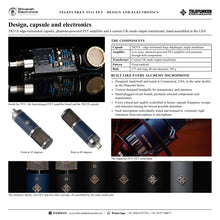
The TELEFUNKEN TF11 FET is a phantom-powered large-diaphragm condenser microphone from the TELEFUNKEN Elektroakustik Alchemy Series, combining an open, detailed Austrian-inspired voicing with modern FET performance.
The compact, cardioid-only TF11 has an exceptionally fast transient response, handles high sound pressure levels and keeps self-noise low, so it moves easily from the home studio to the commercial studio and the stage. Voice, drum overheads and acoustic instruments are its natural sources. It runs on standard +48V phantom power, needs no external power supply, and is designed and assembled by hand in the USA.
| Maximum SPL (1% THD) | > 135 dB SPL |
| Self‑noise | 4 dBA |
| Sensitivity | 14 mV/Pa |
| Fixed polar pattern | Cardioid |
Key features
- Open and detailed tone with an exceptionally fast transient response
- Austrian-inspired voicing in the tradition of classic European tube microphones, with modern FET performance
- TK51S edge-terminated capsule, large diaphragm, single membrane
- Fixed cardioid polar pattern
- High SPL handling: more than 135 dB SPL for 1% THD
- Low-noise phantom-powered FET amplifier: 4 dBA self-noise, 0.005% THD
- Custom UK-made output transformer and premium through-hole components
- Compact size for every recording environment, from home to studio to stage
- Designed and assembled by hand in the USA, individually tested and listened to
Sound character
The TF11 has a beautifully open, detailed frequency response across 20 Hz to 20 kHz. Its fast transient response captures the attack of drums, percussion and plucked strings cleanly, while the smooth, airy top end flatters voices and acoustic instruments.
Capsule and FET electronics
At the heart of the TF11 is the TELEFUNKEN TK51S, an edge-terminated large-diaphragm capsule with a single membrane. Every capsule is frequency swept in-house before assembly. The FET amplifier uses premium through-hole components on hand-plugged circuit boards, with transistors biased for the lowest possible distortion, and drives a custom UK-made output transformer for an output impedance below 200 Ω.
Cardioid polar pattern
The fixed cardioid pattern picks up mainly from the front of the microphone and rejects sound from the rear, which keeps vocals focused and helps separate instruments on stage and in the studio.
Phantom power, mounts and case
The TF11 is powered by standard +48V phantom power from any mic preamp or audio interface, and is ready 15 seconds after power is applied. It ships with two mount options, the M 703 elastic shock mount and the M 782 stand mount, plus a protective MS01 microphone sleeve and a compact MC11 case.
Built in the USA
Like every TELEFUNKEN microphone, the TF11 is built in Connecticut, USA, by a small, dedicated team of engineers and technicians. Each microphone is individually tested and listened to, giving very tight tolerances from one microphone to the next.
In the box
- TELEFUNKEN TF11 microphone
- MC11 Microphone Case
- M 703 Shock Mount
- M 782 Stand Mount
- MS01 Microphone Sleeve
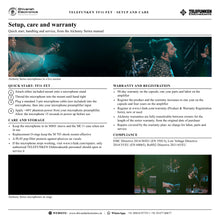
TELEFUNKEN warranty: 90 days on the capsule and one year parts and labour on the amplifier. Register the microphone with TELEFUNKEN to extend this to one year on the capsule and four years on the amplifier; Alchemy Series warranties are fully transferable between owners. Connect with a standard 3-pin XLR microphone cable.
TELEFUNKEN TF11 FET: frequently asked questions
Does the TF11 need an external power supply?
No. The TF11 is a FET condenser powered by +48V phantom power from your mic preamp or audio interface. Allow 15 seconds after switching phantom power on.
Which polar pattern does the TF11 have?
A fixed cardioid pattern, picking up mainly from the front of the microphone.
What is the TF11 best suited for?
TELEFUNKEN recommends it for pop and rock vocals, drum overheads, acoustic guitar, cello and upright bass, percussion, and live sound on drums, piano and acoustic instruments.
Is a stereo set available?
Yes, the TELEFUNKEN TF11 FET Stereo Set is listed as a separate product at Shivansh Electronics.
How does the TF11 differ from the TF17?
Both are cardioid FET microphones in the same body. The TF11 uses the edge-terminated TK51S capsule for an open, detailed sound; the TF17 uses the centre-terminated TK47S capsule for a bolder, mid-forward sound.
Where can I buy the TELEFUNKEN TF11 FET in India?
The TELEFUNKEN TF11 FET is available from Shivansh Electronics, Kolkata, West Bengal, India, with delivery across India.
Workflow 1: Pop and rock vocals
Lead and backing vocals in the home or commercial studio, where the TF11's open, detailed top end helps a voice sit forward in the mix.
Connections
| Connect | To |
|---|---|
| Microphone (XLR output) | Standard 3‑pin XLR microphone cable |
| XLR cable | Mic preamp / audio interface input |
| Mic preamp / audio interface | +48V phantom power switched on |
Setup
- Attach the M 703 shock mount or the M 782 stand mount to a microphone stand and thread the microphone into it until hand tight.
- Connect a standard 3-pin XLR cable from the microphone to your mic preamp or audio interface.
- Switch on +48V phantom power and allow the microphone 15 seconds to power up.
- Use the M 703 shock mount, face the front of the capsule toward the singer and set preamp gain while the singer performs at full level.
Tip: The PL05 pop filter is listed by TELEFUNKEN as an accessory for the TF11.
Workflow 2: Drum overheads
Capturing the full kit and cymbals from above, where fast transient response and high SPL handling matter.
Connections
| Connect | To |
|---|---|
| Microphone (XLR output) | Standard 3‑pin XLR microphone cable |
| XLR cable | Mic preamp / audio interface input |
| Mic preamp / audio interface | +48V phantom power switched on |
Setup
- Mount the TF11 on a boom stand with the M 782 stand mount or the M 703 shock mount.
- Position it above the kit with the front of the capsule pointing down toward the drums and cymbals.
- Switch on +48V phantom power and allow 15 seconds to power up.
- Set gain while the drummer plays at full level; the TF11 handles more than 135 dB SPL.
Workflow 3: Acoustic guitar
Solo or accompanying acoustic guitar, recorded with natural detail and a clean attack.
Connections
| Connect | To |
|---|---|
| Microphone (XLR output) | Standard 3‑pin XLR microphone cable |
| XLR cable | Mic preamp / audio interface input |
| Mic preamp / audio interface | +48V phantom power switched on |
Setup
- Attach the M 703 shock mount or the M 782 stand mount to a microphone stand and thread the microphone into it until hand tight.
- Connect a standard 3-pin XLR cable from the microphone to your mic preamp or audio interface.
- Switch on +48V phantom power and allow the microphone 15 seconds to power up.
- Point the front of the capsule toward the guitar and move the microphone until the balance of body and string detail suits the song, then set gain.
Workflow 4: Cello and upright bass
Bowed and plucked low strings, where the full 20 Hz - 20 kHz range captures both depth and articulation.
Connections
| Connect | To |
|---|---|
| Microphone (XLR output) | Standard 3‑pin XLR microphone cable |
| XLR cable | Mic preamp / audio interface input |
| Mic preamp / audio interface | +48V phantom power switched on |
Setup
- Attach the M 703 shock mount or the M 782 stand mount to a microphone stand and thread the microphone into it until hand tight.
- Connect a standard 3-pin XLR cable from the microphone to your mic preamp or audio interface.
- Switch on +48V phantom power and allow the microphone 15 seconds to power up.
- Use the M 703 shock mount to isolate the microphone from floor vibration, aim it at the instrument and set gain for the loudest passages.
Workflow 5: Percussion
Hand drums, shakers, tambourine and other percussion with sharp transients.
Connections
| Connect | To |
|---|---|
| Microphone (XLR output) | Standard 3‑pin XLR microphone cable |
| XLR cable | Mic preamp / audio interface input |
| Mic preamp / audio interface | +48V phantom power switched on |
Setup
- Attach the M 703 shock mount or the M 782 stand mount to a microphone stand and thread the microphone into it until hand tight.
- Connect a standard 3-pin XLR cable from the microphone to your mic preamp or audio interface.
- Switch on +48V phantom power and allow the microphone 15 seconds to power up.
- Aim the capsule at the instrument and set gain on the loudest hits; the low-noise FET amplifier keeps quiet details clean.
Workflow 6: Live sound: drums, piano and acoustic instruments
Stage use on drums, piano and acoustic instruments, where a compact, dependable microphone is needed.
Connections
| Connect | To |
|---|---|
| TF11 microphone | Standard 3‑pin XLR cable |
| XLR cable | Stage box or mixing console mic input |
| Mixing console | +48V phantom power on that channel |
Setup
- Attach the M 782 stand mount or M 703 shock mount to the stand and thread the TF11 in until hand tight.
- Connect the XLR cable to the stage box or console input.
- Switch on +48V phantom power and allow 15 seconds before the line check.
- Use the cardioid pattern's rear rejection by pointing the back of the microphone toward the stage monitors, then set gain.
Tip: Store the TF11 in its MS01 sleeve and MC11 case between shows.


