
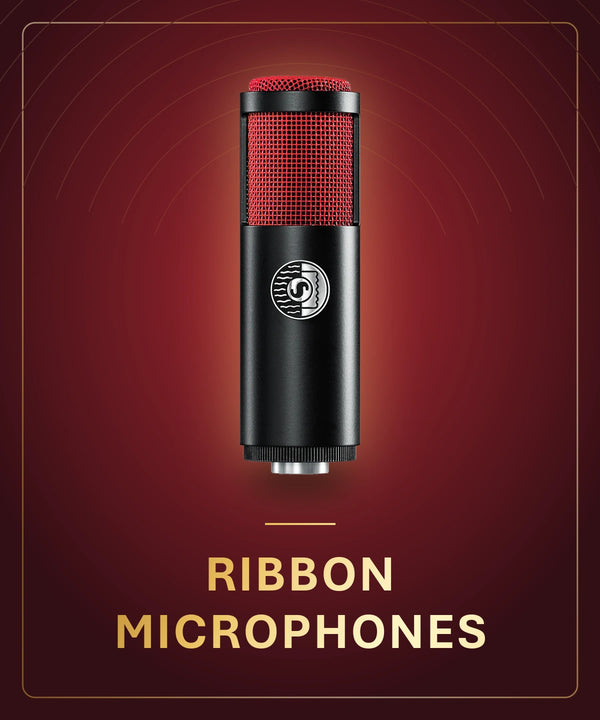
Ribbon Microphones Buying Guide
November 22, 2026 · Shivansh Electronics, Kolkata
Ribbon microphones are known for a smooth, natural sound that suits vocals, softens bright guitar amplifiers and brass, and captures strings and rooms with a realistic sense of space. Most have a figure-of-eight pattern, and passive models need a preamp with plenty of clean gain. This guide explains how to choose and use the ribbon microphones in our range.
How a ribbon microphone works
Inside a ribbon microphone, a very thin, light ribbon of conductive material hangs between the poles of a strong magnet. Sound waves move the ribbon, and its movement in the magnetic field generates a small electrical signal, which a transformer raises to microphone level. Because the ribbon is so light, it follows the sound closely, and most designs have a gentle, natural high end rather than a bright peak. Some modern ribbon materials are much tougher than traditional foil, so these designs cope well with loud sources.
Figure-of-eight pickup
A ribbon that is open on both sides picks up sound equally from the front and the back, and very little from the sides. The side nulls are useful: aim them at a neighbouring instrument or a monitor to reduce spill. The rear pickup captures room sound, which adds space in a good room but can add unwanted reflections in a small one, so face the back of the microphone towards a quiet or treated area. Some ribbons are voiced differently on each side, giving two sound characters from one microphone, while others sound the same on both sides.
Passive and active ribbon microphones
- Passive ribbons: no internal electronics and no need for phantom power. Their output is low, so they need a quiet preamp with plenty of gain.
- Active ribbons: built-in electronics, powered by phantom power, raise the output and make the microphone less dependent on the preamp it is used with.
With a passive ribbon, choose a preamp with a high input impedance and enough clean gain for quiet sources. Our Microphone Preamp Buying Guide explains what to look for.
Sound pressure and placement
Check the maximum sound pressure level in the data sheet before placing a ribbon close to a guitar amplifier, a brass section or drums. Ribbons are more sensitive to strong blasts of air than to loudness alone, so keep them away from kick drum ports, loudspeaker ports, wind and close plosives. Ribbons also show a strong proximity effect: the bass rises as the microphone moves closer to the source, which can add warmth to a voice or a guitar cabinet, while moving back gives a leaner, more natural balance.
Choosing for your application
Vocals and voice-over
A ribbon gives vocals and speech a smooth, warm character that suits many styles. Use a pop screen, keep the singer at a steady distance and use the proximity effect to control the low end.
Guitar amplifiers and brass
In front of a guitar cabinet or a horn section, a ribbon smooths harsh highs while keeping body and attack. Many engineers blend a ribbon with a dynamic microphone on the same guitar cabinet.
Strings, choirs and rooms
For violins, cellos, acoustic instruments, choirs and room sound, a ribbon placed a little further back captures a natural tone and a realistic sense of space. Two figure-of-eight microphones crossed at 90 degrees, or a figure-of-eight microphone used as the side microphone of a mid-side pair, make classic stereo recordings. For a brighter, more detailed sound at a distance, see our FET condenser microphones.
Setup and care tips
- Follow the manufacturer's guidance on phantom power, and switch it off before connecting or patching a passive ribbon
- Use a pop screen for vocals, and never blow into the microphone to test it
- Keep the microphone in its case or cover when it is not in use, as its magnet attracts metal dust
- Mount it in a shock mount and handle it gently
- Check polarity when a ribbon is used with other microphones on the same source, as the rear of a figure-of-eight microphone is opposite in polarity to the front
Browse microphone accessories and covers and cases to mount and protect your microphone.
Common mistakes to avoid
- Using a preamp without enough clean gain for a passive ribbon
- Placing the microphone in the blast of air from a kick drum or loudspeaker port
- Ignoring the rear pickup in a small, reflective room
- Recording vocals without a pop screen
- Patching a passive ribbon with phantom power switched on
- Leaving the microphone uncovered when it is not in use
Related guides
- Microphone Preamp Buying Guide
- Condenser vs Dynamic Microphones: Which to Choose
- FET Condenser Microphones Buying Guide
- How to Choose Shock Mounts & Pop Filters
Buying ribbon microphones at Shivansh Electronics
Explore our full range of ribbon microphones at Shivansh Electronics, Kolkata, West Bengal, India, with delivery across India. Contact / WhatsApp +91 89818 07755 / +91 91477 00677 for advice on choosing a ribbon microphone, a preamp and accessories for your recordings.


